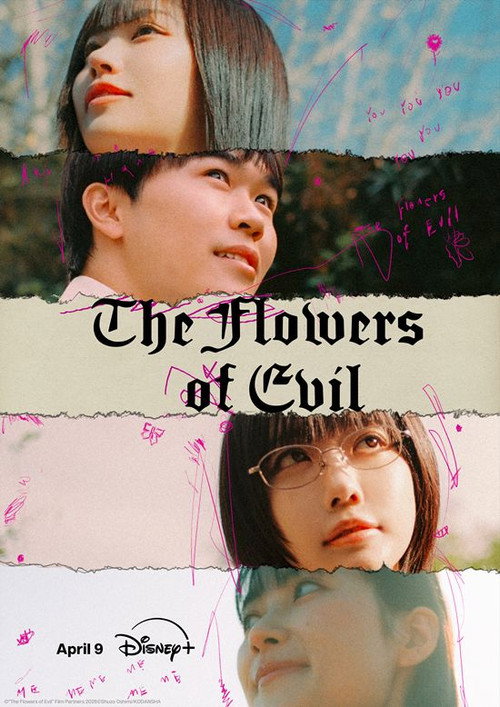
When we talk about teen series, we often think of sweet romance or self-discovery. But The Flowers of Evil (2026) takes us deep into the dark side of adolescent minds with a palpable sense of discomfort. Based on the famous manga by Shuzo Oshimi, the series follows a young boy trapped in a narrow world until he meets 'her,' who changes his life forever.
Plot Summary (No Spoilers)
The story of Takao Kasuga (Fuku Suzuki), a high school boy obsessed with Baudelaire's poetry, but living an awkward life, bullied and unable to express himself. One day, he forgets his copy of 'Les Fleurs du Mal' in the classroom, and Sawa Nakamura (ano), a mysterious girl in the same class, picks it up. She knows his secret and begins to force him to do her bidding, leading to a twisted relationship full of psychological tug-of-war and the pain of adolescence confronting inner conflict.
Acting and Characters
Fuku Suzuki brilliantly conveys Kasuga's vulnerability and confusion. His fearful eyes and depressed body language make the audience feel the discomfort he carries. Meanwhile, ano as Sawa Nakamura is both creepy and captivating. She plays the role with layers—cold, domineering, and fragile all at once. Aruno Nakanishi as Aya Tokiwa, the loyal friend, serves as a representation of normalcy that Kasuga tries to grasp. Though her role is small, she balances the story.
Direction, Visuals, and Music
The director uses visual techniques that emphasize discomfort, such as tight framing, dim lighting, and camera angles that make characters look small and isolated. The music is simple but powerful, perfectly enhancing the tense atmosphere. Especially in scenes where Kasuga and Sawa interact, the sound gradually fades, leaving only breathing, making the audience hold their breath. The series uses symbols of flowers and butterflies to convey beauty in evil, which manga fans will appreciate.
Editorial Analysis
The Flowers of Evil is not a series to watch for fun; it is a reflection of the mental state of adolescents oppressed by social norms, through the 'victim and perpetrator' relationship that oscillates between Kasuga and Sawa. The series asks: What is 'evil'? Does it come from the individual or from a repressive society? The storytelling that focuses on discomfort may make some viewers uneasy, but that is its strength, setting it apart from typical teen series. It forces us to confront the shadows within ourselves.
Verdict
The Flowers of Evil (2026) is a challenging series with intense content and a tense atmosphere. If you enjoy stories that explore the dark side of the human mind and are ready for the discomfort that permeates every frame, this series is a masterpiece worth watching. But if you're looking for light entertainment, skip it.
Screenshots


👍 Pros
- +Powerful performances by Fuku Suzuki and ano that are captivating and eerie
- +Realistic, uncomfortable, and tense atmosphere
- +Deep interpretation of themes of evil and adolescence
👎 Cons
- −Slow pacing may not appeal to general audiences
- −Heavy and dark content throughout
Top Cast




FAQ
It is a slice-of-life psychological series, not horror, but it has an uncomfortable and emotionally tense atmosphere.
It adapts faithfully to the first volume of the manga, but adds some details to suit the series format.
Not recommended, as the series is full of suffering and psychological conflict that may cause discomfort.